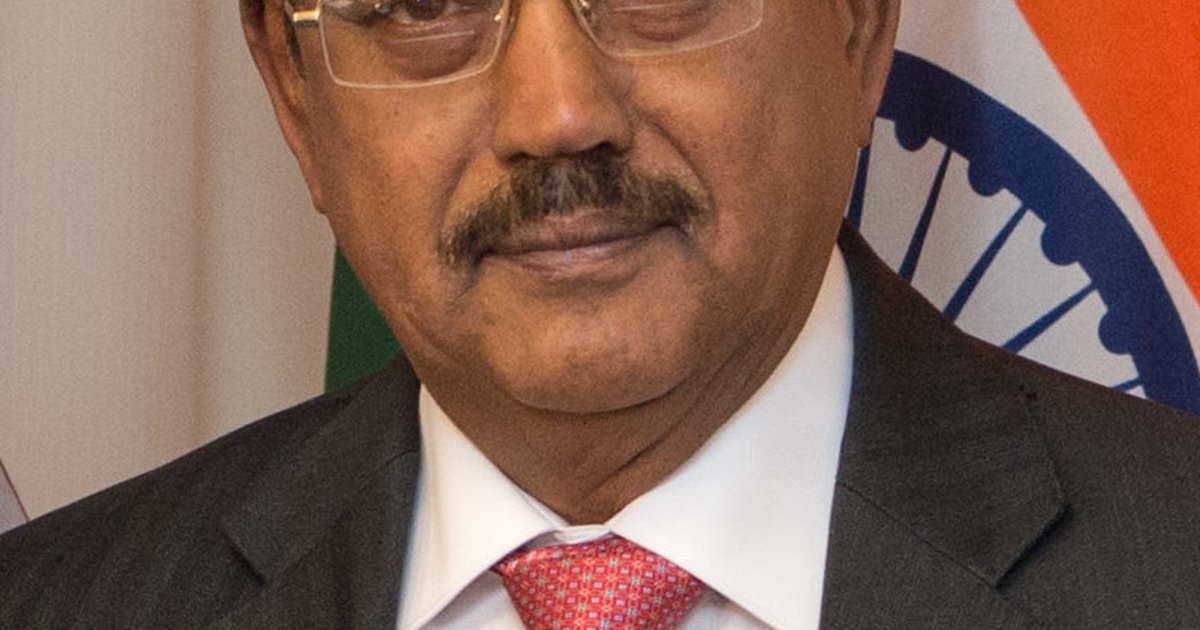
Ajit Doval
AJIT DOVAL — INDIA'S NATIONAL SECURITY ARCHITECT
Ajit Doval is India's National Security Advisor, the country's apex civilian intelligence and strategic policy coordinator reporting directly to Prime Minister Narendra Modi. As custodian of India's foreign policy architecture during a period of acute geopolitical fragmentation, Doval commands exceptional influence over New Delhi's engagement with Washington, Beijing, Moscow, and its Indo-Pacific strategy. His significance extends beyond domestic briefing rooms: his diplomatic moves directly signal Modi government intent on nuclear-armed India's positioning amid U.S.-China strategic competition and Russia's isolation. Doval's intellectual framework on border management, economic sovereignty, and great-power balancing has become the operational code for Indian statecraft.
Doval ranks 168th on the LeadersCartel Power Index with a composite score of 1.8, tracked across 40 active intelligence sources. His signal distribution shows one emerging indicator, suggesting his current influence trajectory remains stable but subject to near-term developments in India-China relations and BRICS coordination. The monitored tier classification reflects consistent high-level activity without breakthrough momentum. His sustained relevance derives from India's pivotal position between the U.S. alliance network and non-aligned institutions, amplifying Doval's role as Modi's primary instrument for threading this needle.
Recent headlines illuminate his operational tempo. The Doval-Wang Yi meeting sparked analysis regarding Xi Jinping's BRICS Summit participation, indicating Doval's direct engagement with Chinese leadership on symbolic multilateral events. Simultaneous Beijing talks on the India-China border dispute reveal pursuit of an "early harvest" de-escalation framework—a tactical attempt to compartmentalize conflict. Doval's emphasis on border peace as prerequisite to normalized bilateral ties represents continuity in his doctrine: strategic compartmentalization over comprehensive resolution.
Analysts should monitor whether Wang Yi's return signal indicates Beijing's willingness toward sustained border management talks or tactical temporizing ahead of U.S.-China tensions under the Trump administration. The specific trigger event to watch: any public statement from Doval within 72 hours regarding concrete timelines for next-phase border negotiations. Such messaging would signal Modi government confidence in de-escalation momentum versus defensive posturing.