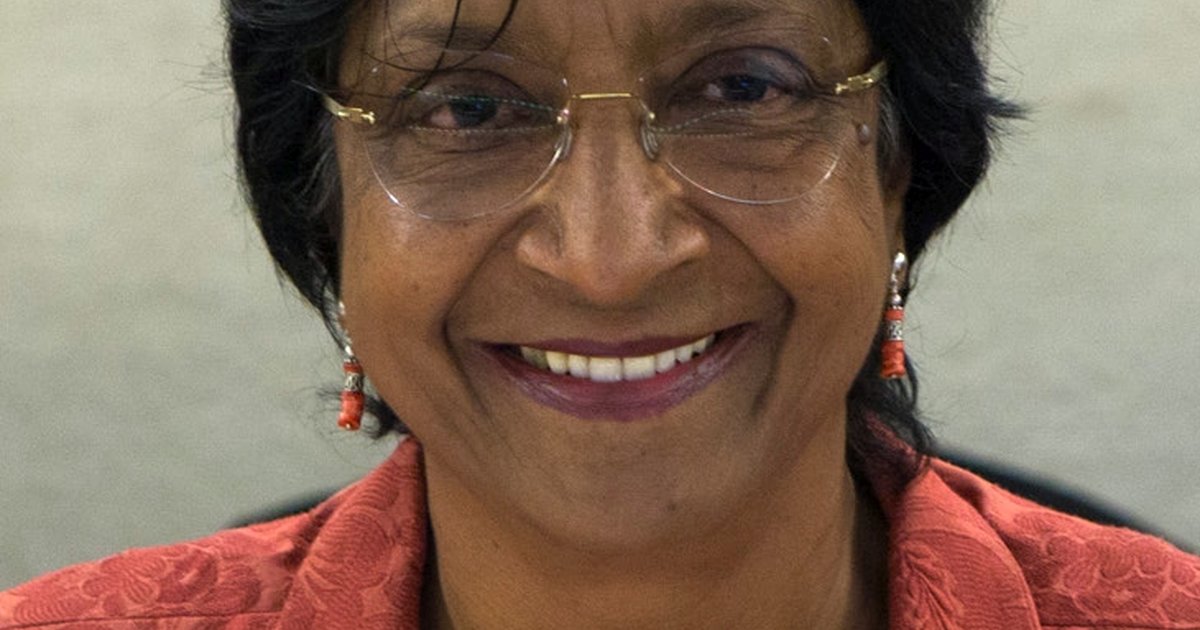
Navanethem Pillay
INTELLIGENCE DOSSIER: NAVANETHEM PILLAY
Navanethem "Navi" Pillay is a South African human rights advocate and international legal authority currently serving in a prominent advisory capacity within global governance structures. Her significance derives from four decades of activism against apartheid and subsequent leadership roles in transitional justice mechanisms, making her a central figure bridging developing nation interests with international humanitarian law frameworks. Pillay commands influence across multiple strategic domains: her institutional credibility shapes human rights discourse in forums spanning the UN system, African Union deliberations, and bilateral engagement channels with nations including India and Iran. Her positioning reflects Western-aligned soft power infrastructure while maintaining credibility within Non-Aligned Movement constituencies, particularly South Africa, creating rare diplomatic access across polarized geopolitical blocs.
Pillay's rank 159 on the LeadersCartel Power Index with a score of 1.9 reflects stable but moderate influence within monitored leadership ecosystems. Signal tracking across 128 sources shows asymmetric distribution: one emerging signal, no high-impact signals, and one watch-tier alert. This tier classification indicates Pillay operates in incremental influence rather than acute crisis management. Her index position has likely benefited from accumulated institutional capital and consistent advocacy messaging, though her score trajectory suggests plateauing rather than acceleration. The "monitored" tier designation confirms she maintains strategic relevance without commanding crisis-level attention from primary power brokers.
The 2026 Nobel Peace Prize award to Pillay validates her apartheid-era legacy and contemporary human rights jurisprudence, generating immediate geopolitical reverberations. Netanyahu's public accusation that the Nobel Committee has "lost moral compass" signals Israeli security establishment concerns regarding Pillay's potential influence over international legal mechanisms relevant to Middle Eastern conflicts. South African headline coverage emphasizing her anti-apartheid career reactivates her symbolic weight within African political discourse during periods of continental governance debate. These three signals collectively indicate her prize recognition translates into institutional amplification across advocacy networks.
Analysts should monitor whether Pillay leverages Nobel platform visibility to assume formal positions within UN human rights bodies or international criminal justice institutions over the next 72 hours. Watch for statement releases connecting her award to current conflict zones, particularly Iran and India tensions, which would indicate strategic repositioning toward active policy influence rather than retrospective recognition