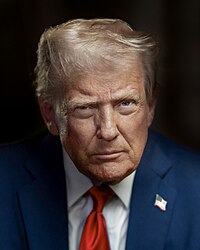
Donald Trump declared on August 13 that the Strait of Hormuz will become US territory following Iran's defeat, a statement that escalates American claims in the Persian Gulf at a moment when a UAE-flagged vessel attack confirms the waterway remains volatile. The declaration represents a significant hardening of US positioning in a region where Iran's ability to threaten shipping has historically anchored its deterrent power. The move signals an effort to consolidate control over one of the world's most strategically vital corridors for global energy supply.
Trump's assertion came as regional tensions remained elevated following reported attacks on commercial shipping. A vessel operated by the UAE's ADNOC, one of the Gulf's largest energy companies, sustained damage while transiting the Strait on August 13, according to reporting from multiple outlets. The attack underscores the persistence of maritime threats in waters where roughly one-third of global seaborne oil passes daily. Trump's framing of Hormuz as falling within US strategic territory—rather than international waters under nominal UN convention—represents a deliberate rhetorical shift that formalizes what US military presence has long suggested de facto.
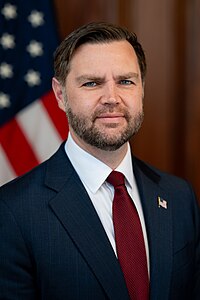
The declaration carries implications for how Washington intends to manage the region's power structure going forward. JD Vance, Trump's running mate and a figure with significant influence over the administration's foreign policy orientation, has previously advocated for a more assertive US posture in the Gulf, according to reporting from Politico in July. Vance and senior advisers including Jared Kushner have framed expanded US control over critical maritime chokepoints as essential to maintaining leverage over both energy markets and state actors dependent on trade flows. The Hormuz claim builds on this doctrine, positioning the strait as a zone of explicit American jurisdiction rather than contested international space.
To be sure, prior US administrations maintained de facto control over Hormuz through naval presence and Freedom of Navigation operations, though they avoided explicit territorial claims that would invite legal challenge under international maritime law. Trump's rhetorical move departs from this convention, signaling a preference for explicit rather than implicit dominion. The shift appears calculated to deter Iranian asymmetric operations—mine-laying, drone strikes, or maritime blockades—by establishing unambiguous US ownership of the consequence structure. Brent crude climbed 1.42% in yesterday's session, reflecting trader perception that any interruption to Hormuz traffic now carries higher US military escalation risk than it did before the declaration.
The strategic stakes extend beyond Iran. The claim also positions the US to dictate terms for regional allies—particularly Saudi Arabia and the UAE—whose energy exports depend entirely on Hormuz transits. By asserting control, Trump narrows the space for independent Gulf action while securing US leverage over the oil supply curve that shapes global energy pricing. The move signals that US deterrent power, not multilateral agreement or Iranian restraint, is now the organizing principle for Gulf security. This represents a consolidation of American power in a region where Beijing and Moscow have both sought to expand influence in recent years.