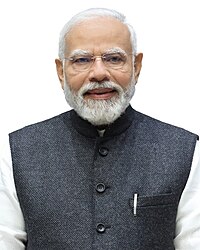
India's central position in US strategic planning faces mounting pressure from two converging crises: accelerating Pakistani federal security tightening along the Afghan border, and deepening tensions between Prime Minister Narendra Modi and US satellite operator Elon Musk over Starlink licensing in critical infrastructure zones. The simultaneous tensions signal a narrowing window for India to balance US technology partnerships with domestic security sovereignty—a calculation complicated by opposition mobilization at home that echoes recent institutional fractures in Bangladesh.
Pakistan's federal authorities are reinforcing control mechanisms along the Afghan border despite sustained militant exploitation of cross-border vulnerabilities, according to reporting by Reuters on October 10. The escalation reflects a direct security challenge to India's western flank, where border regions have historically absorbed Pakistani spillover instability. India's strategic planners face an immediate dilemma: Pakistan's internal consolidation may reduce militant sanctuary capacity, but federal tightening often correlates with nationalist posturing that complicates bilateral dialogue. The move signals that Pakistan's military and civilian leadership see border control as a prerequisite for legitimacy, not an outcome of it.
Modi's reaffirmation of development priorities in Chennai on October 9, reported by The Economist, came amid active licensing disputes over Starlink's expansion into Indian infrastructure corridors. The government's hesitation on Musk's satellite internet infrastructure reflects a core strategic anxiety: that US technology partnerships create asymmetric dependencies in sectors—telecommunications, early-warning systems, financial grids—where foreign control carries sovereign cost. Unlike purely commercial technology disputes, this one involves India's ability to operate independent communication architecture in contested border regions. Modi has framed the decision as developmental, not security-driven, a posture that masks deeper institutional disagreement within New Delhi on how much foreign capital to permit in critical zones.
The timing of both pressures aligns with opposition mobilization that analysts describe as echoing Bangladesh's institutional rupture, according to reporting in The Economist's South Asia analysis on October 8. To be sure, Modi maintains that his government has systematically strengthened institutions and rule of law; critics and opposition figures counter that concentration of executive authority and pressure on independent media signal institutional weakening. The domestic political vulnerability appears to have narrowed Modi's negotiating flexibility with Washington on technology partnerships. A weakened political position at home typically forces leaders toward nationalist stances abroad—stances that can complicate alliance management precisely when alliance cohesion would reduce external pressure.
The convergence suggests that India's ability to maintain balanced positioning between US technology partnerships and domestic security autonomy is eroding. Simultaneously, Pakistan's federal consolidation removes one variable from India's calculus but introduces another: if Pakistan stabilizes internally, Indian military planners must revise assumptions about cross-border militia flows and sanctuary capacity. US Senators have challenged Trump administration authority on sanctions reversal toward Russia, according to Bloomberg reporting on October 9, signaling that Washington itself faces domestic constraints on unilateral pivot decisions. India is watching those constraints carefully. When US policy faces Congressional resistance at home, allied nations lose confidence in bilateral commitments. Modi's emphasis on development—rather than security cooperation—may reflect a strategic recalibration: a hedge against the possibility that US technology partnerships will prove unreliable if Washington's internal politics shift again.