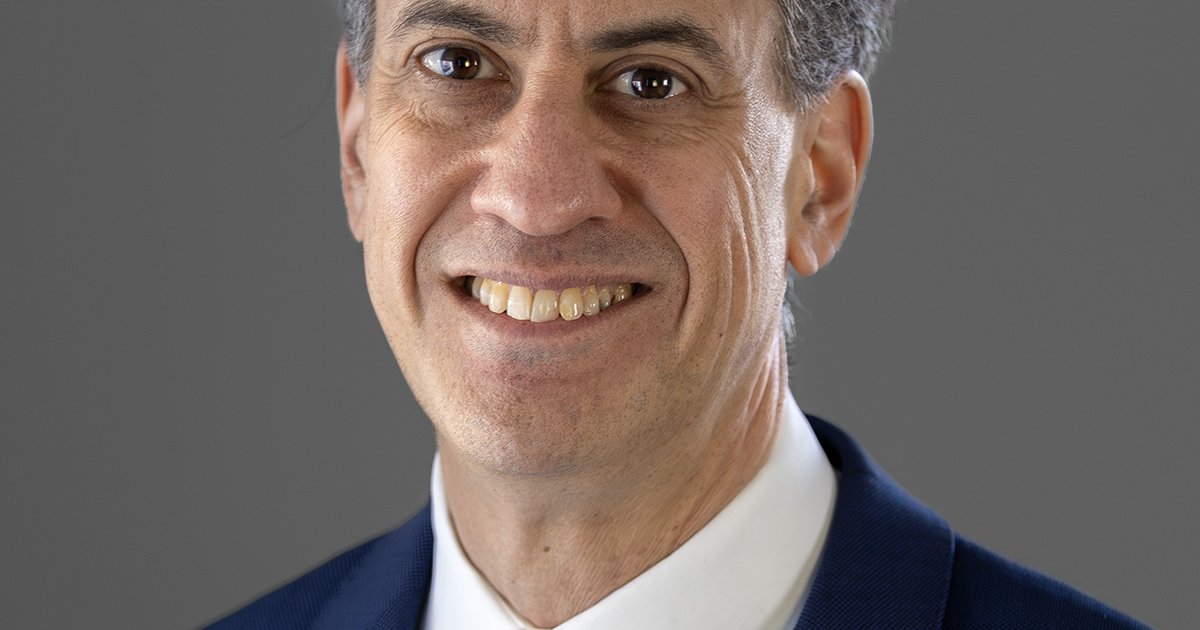
Ed Miliband
INTELLIGENCE DOSSIER: ED MILIBAND
Ed Miliband is the current UK Foreign Secretary under Prime Minister Keir Starmer, making him the principal architect of British diplomatic strategy during a period of significant geopolitical realignment. As the UK's chief foreign policy official, Miliband holds strategic responsibility for Britain's diplomatic relationships across the Indo-Pacific, Middle East, and transatlantic arena—particularly critical given renewed US isolationism under the Trump administration and deepening European fragmentation following Friedrich Merz's ascension in Germany. His significance derives from Britain's persistent influence as a permanent UN Security Council member and NATO stalwart, positioning him as a key interlocutor between Washington and Brussels during the 2025 recalibration of Western alliance structures.
Miliband's LeadersCartel ranking of 164 with a power score of 2.4 reflects his monitored tier status within a moderately influential band of secondary-tier global figures. Tracked across 844 intelligence sources, his signal distribution remains concentrated in single high-impact vectors (1H) with no emerging signals and one watch-list designation. This ranking suggests stable but circumscribed influence—substantial within European foreign policy circles but limited in autonomous global projection capacity. His score trajectory indicates neither rising prominence nor declining significance, consistent with a technocratic foreign minister operating within institutional constraints rather than wielding independent power bases.
Recent signal activity reveals escalating friction with the Trump administration. A US ambassador reportedly dismissed Miliband's characterization of Trump as an "idiot," signaling early tension between the new US administration and British diplomatic messaging. Simultaneously, headlines position Miliband as articulating comprehensive UK positions on Israel, Iraq, Syria, and Iran—complex dossiers where British interests often diverge from Trump's transactionalist approach. These signals indicate Miliband is actively differentiating UK foreign policy from Washington rather than executing lockstep alignment, a posture carrying meaningful domestic political consequences for Starmer's government.
Monitor Miliband's next public statements on Middle East policy and Trump administration dealings over 48-72 hours. The specific trigger event to watch: any formal British position on Trump's anticipated Iran policy shifts or Israeli-Palestinian escalations. These statements will reveal whether Starmer's cabinet intends strategic independence or accommodation